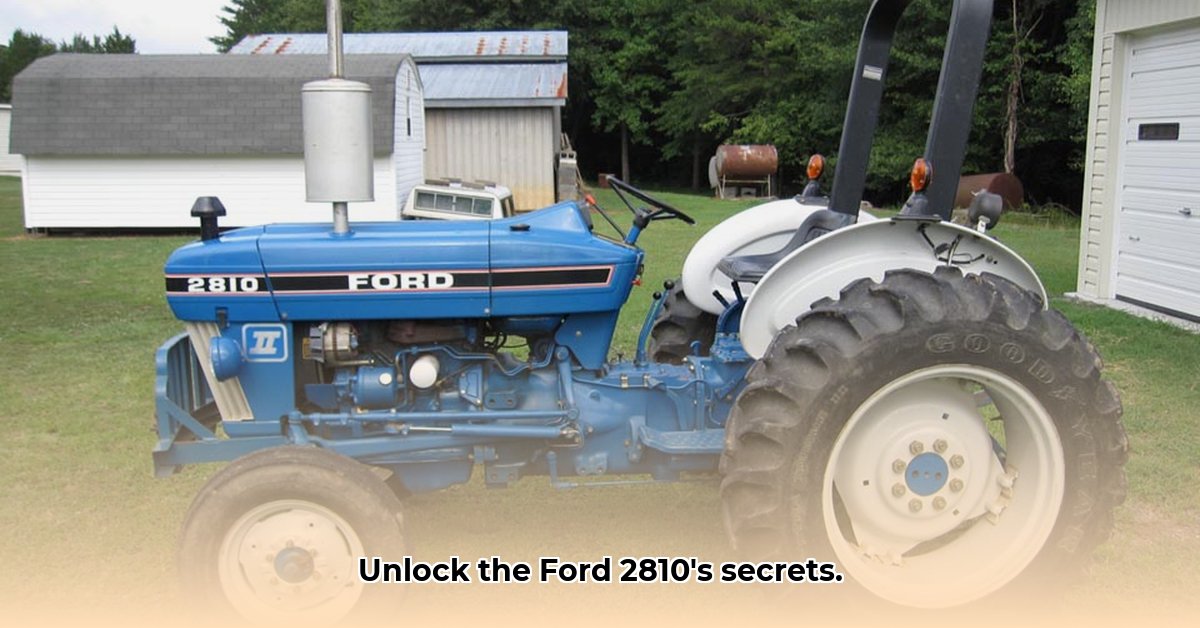
The Ford 2810, a stalwart of 1980s farming, remains a popular choice for both working farmers and collectors. This comprehensive guide explores its history, technical specifications, maintenance, and collector value, providing actionable information for all stakeholders. For more information on similar Ford tractors, check out this helpful resource: Ford 1510 info.
Specifications and Technical Details
The Ford 2810 featured a robust 2.6-liter three-cylinder diesel engine, delivering approximately 34-36 horsepower (depending on gross or net measurement) and roughly 32-33 PTO horsepower. This power was sufficient for various tasks on smaller farms. Transmission options included an 8-speed dual-range or a 6-speed mechanical shuttle, offering gear flexibility. Both 2-wheel-drive and 4-wheel-drive versions were available, enhancing versatility across different terrains. The hydraulic system, an open-center design with a 12.1-gallon reservoir, could lift approximately 2936 pounds. However, inconsistencies exist regarding fuel tank capacity, with sources reporting either 13 or 16 gallons, necessitating further investigation to clarify these discrepancies.
Here's a summary of key specifications:
| Feature | Specification | Notes |
|---|---|---|
| Engine | 2.6L, 3-cylinder diesel | Power output varied; further research needed to clarify variations. |
| Power Output | Approximately 34-36 hp (gross/net), ~32-33 PTO hp | Sufficient for tasks on smaller farms and ranches. |
| Transmission | 8-speed dual range or 6-speed mechanical shuttle | Flexibility for diverse tasks and operator preference. |
| Drive Type | 2WD or 4WD | Adaptability to various terrains and applications. |
| Hydraulic System | Open-center, 12.1 gallons | Adequate lift capacity for its class. |
| Fuel Tank Capacity | 13-16 gallons (inconsistent reporting) | Requires further research to determine precise capacity. |
Market Context and Historical Significance
Introduced around 1983 and produced until approximately 1990, the Ford 2810 occupied a mid-range position within Ford's tractor lineup. Its blend of performance and affordability appealed to a wide range of farmers. While lacking the advanced electronics of modern tractors, its robust build and dependable operation contributed to its popularity. Precise sales figures remain elusive, but its continued presence in working farms and collector circles attests to its success. Its original price (around $16,000 in 1990) makes it a relatively accessible vintage tractor for both hobby and work purposes. However, a lack of inflation-adjusted data hinders a precise comparison to contemporary tractor prices.
Ownership and Maintenance
Finding parts for a Ford 2810 may require effort. Online marketplaces, specialized agricultural equipment suppliers, and online forums dedicated to Ford tractors are valuable resources. Regular maintenance is paramount for extending the tractor's lifespan. This includes routine oil changes, filter replacements, and thorough inspections of critical components. A well-preserved owner’s manual is an invaluable resource for a detailed maintenance schedule. Familiarity with common issues, such as fuel system problems or hydraulic leaks, enables prompt resolution and cost savings.
Collector's Perspective
The Ford 2810's relative affordability within the vintage Ford tractor market contributes to its appeal among collectors. The tractor's condition, originality, and operational readiness significantly influence its value. Meticulous research, including serial number decoding (if possible), and preservation of original components enhances its desirability. Engaging with Ford 2810 enthusiast communities provides access to valuable information, parts, and expertise.
Actionable Steps for Owners and Collectors
- Comprehensive Documentation: Record serial number, model details, and unique features. Photographs and videos are highly recommended.
- Proactive Parts Sourcing: Establish relationships with parts suppliers and acquire components for regular maintenance before they are needed.
- Community Engagement: Join collector groups and online forums to exchange information and potentially locate rare parts.
- Detailed Record Keeping: Maintain a comprehensive log of all repairs, maintenance, and modifications.
- Professional Restoration (if necessary): For extensive restoration, plan meticulously and consult experienced specialists.
Conclusion
The Ford 2810 transcends its function as merely a tractor; it represents a piece of agricultural history. Its simple yet robust design and enduring legacy make it a desirable machine for both practical use and collecting. Whether you operate a farm or nurture a collection of vintage machines, the Ford 2810 offers enduring appeal.